Showing posts with label analog. Show all posts

Tuesday, March 21, 2017

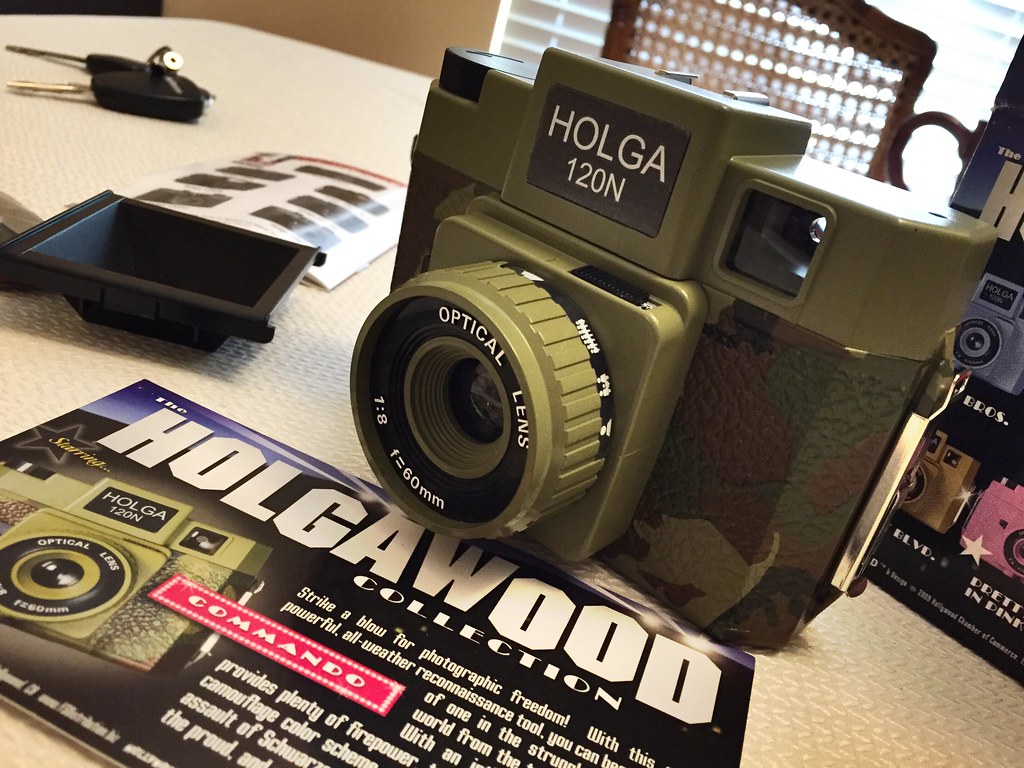
Going "Commando": My New Holga 120N

I'm not usually a toy camera kind of person. The couple that I have don't get much use, they're just not my style.  But I recently won third place in a photo contest, and my prize was this olive camouflage "Holgawood Collection" Holga 120N, called "Commando". With the factory having shut down, I figured that at least now I'll get a chance to use one of these infamous little cameras before they are nowhere to be found  (although now Freestyle says they're coming back?!).

Of course, I am aware of the Holga's "So Tragically Flawed It's Cool" status that makes it the darling of hipsters worldwide. In fact, even the user manual extolls the virtues of its plastic lens and probable light leaks as "stretching our visual perception" in ways a proper camera apparently cannot.  The idea of random uncontrollable light leaks as a feature rather than a problem makes little sense to me, and I certainly don't think I'll be using the Holga as a primary camera for "real" shooting, but I do sort of get the allure of an all-plastic zone focus toy that requires little or no effort.

Friday, February 24, 2017

The Agfa Ansco D-6 Cadet

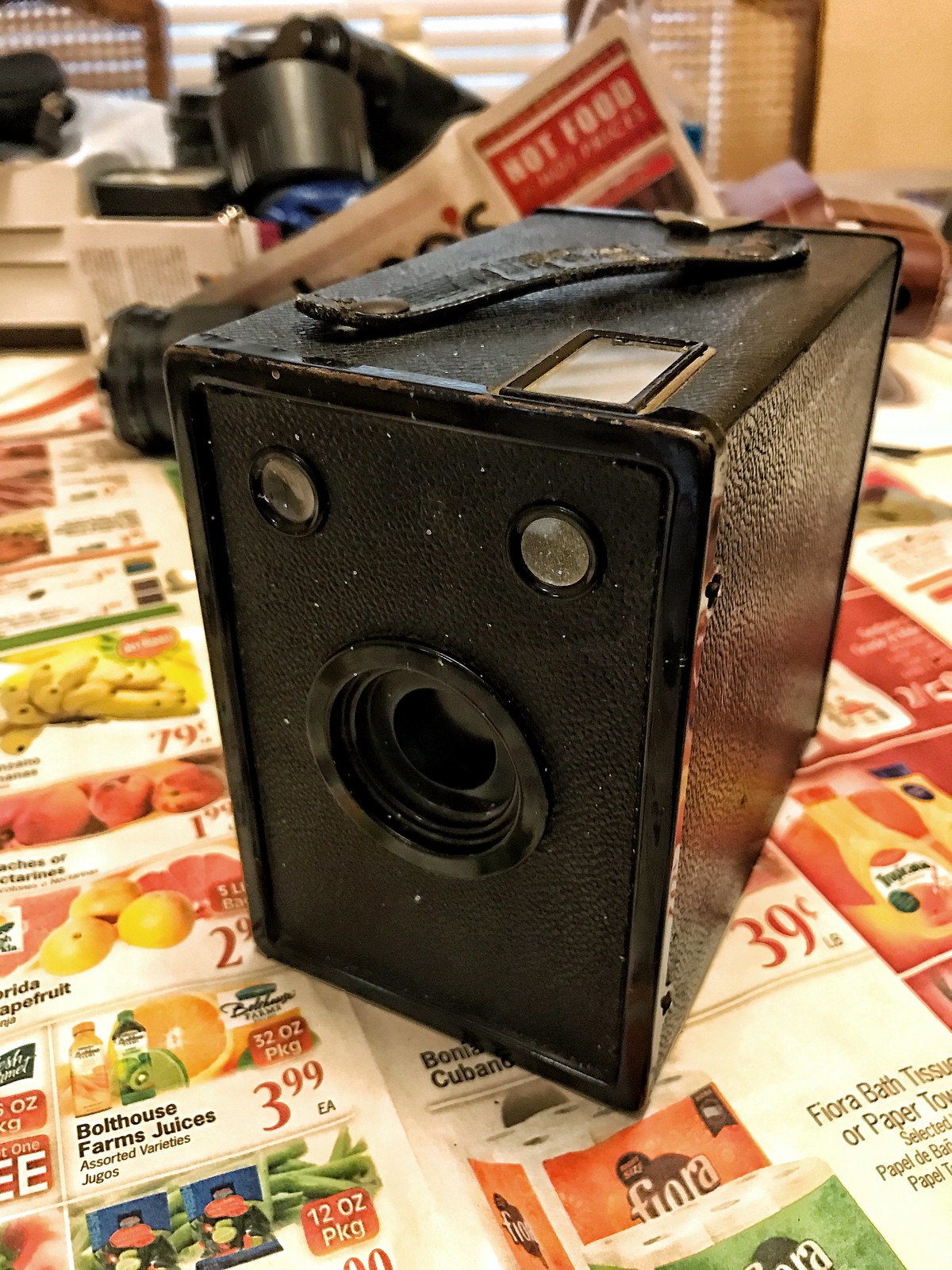
Agfa Ansco D-6 Cadet
A while back, I found a guy on Craigslist that was selling several random cameras out of a box in the trunk of his car. I think he was working for a thrift store and probably would collect some of the cameras that he ran across, using them as display pieces in his house. For whatever reason, he wanted to get rid of them so I met with him, rummaged through his stuff, and bought the entire box for $30. One of the 7 or 8 cameras in there was this box camera, an Agfa Ansco D-6 Cadet, which was produced from 1935 until 1941. Usually when I run across a pre-WWII box camera like this, it's a mess. The lens is missing or damaged, the winding mechanism is destroyed, etc.  In this case, it was just a little dirty. So I cleaned it up!


Thursday, June 16, 2016

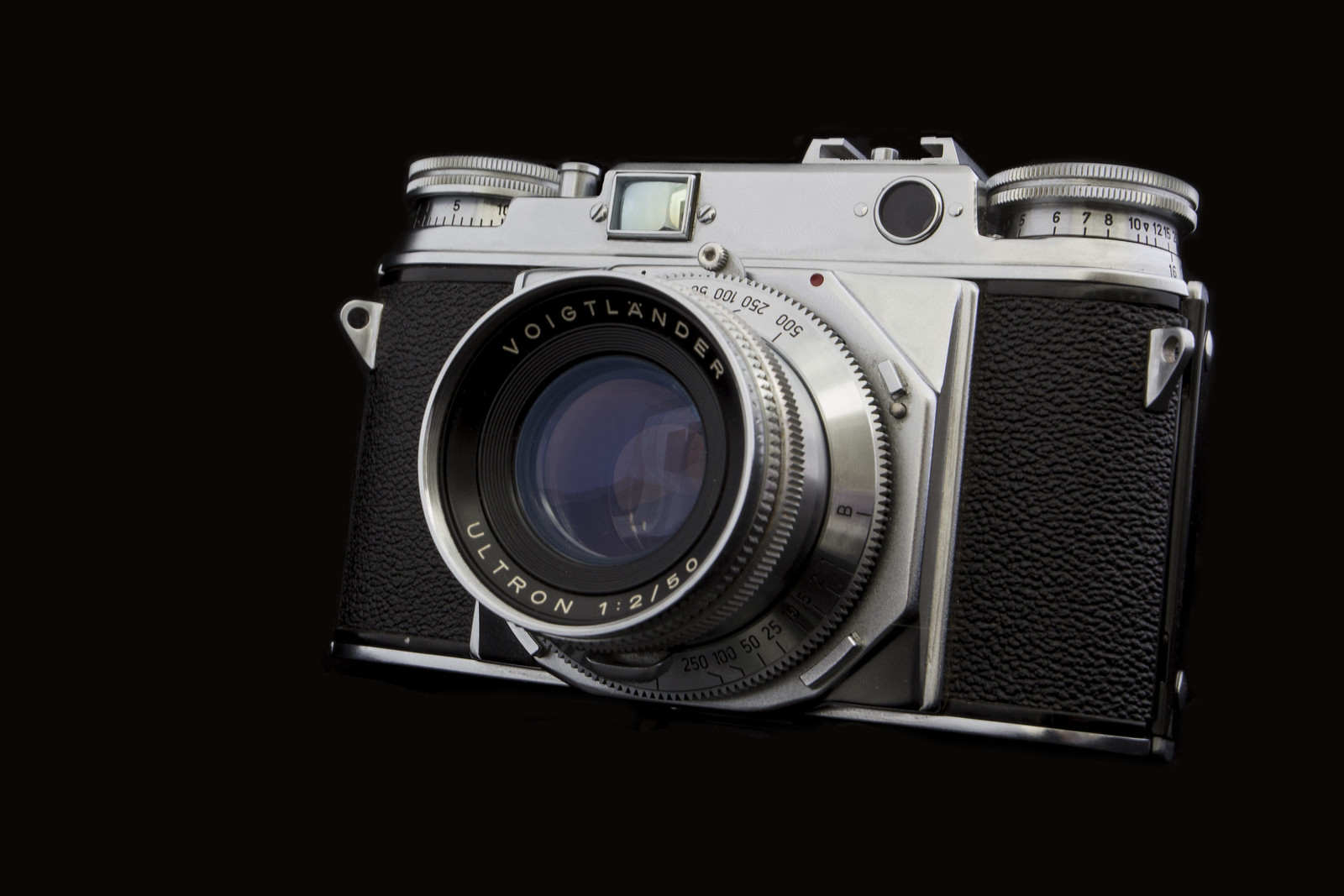
The Voigtländer Prominent: Strange Is Beautiful

I laughed a little to myself when I read the Craigslist ad, "We know how much it cost, but what is it worth?! Submit your offers and the highest bid will be accepted on April 5th!" The blurry, oddly angled photo taken in bad light betrayed little or no sense of its condition, and I just let it pass. Of course I wanted a nice 1950's era chrome rangefinder, but I'm not really willing to get into a bidding war over one. I've got plenty of cameras already.


Come On-a My House


April 5th came and went, and the ad was re-listed. Then it was re-listed again, and then again. No one was biting. Eventually curiosity got the best of me, and I sent an email asking what kind of price range he was looking for.  He wanted $200, I politely declined with the excuse that I was just looking for something cheap to take on vacation with me, and I wished him luck.

Here's the fun part: when he heard I was actually going to be using the camera and not just putting it on display somewhere, he offered to give it to me for $100 and the assurance that I'd put it to good use. Apparently it belonged to a friend of his, a 91-year-old veteran that bought it while stationed in Germany sometime around 1951. He agreed to sell it for his friend, who was excited to hear that it might get some use again.

So the adventure began.
Friday, May 13, 2016

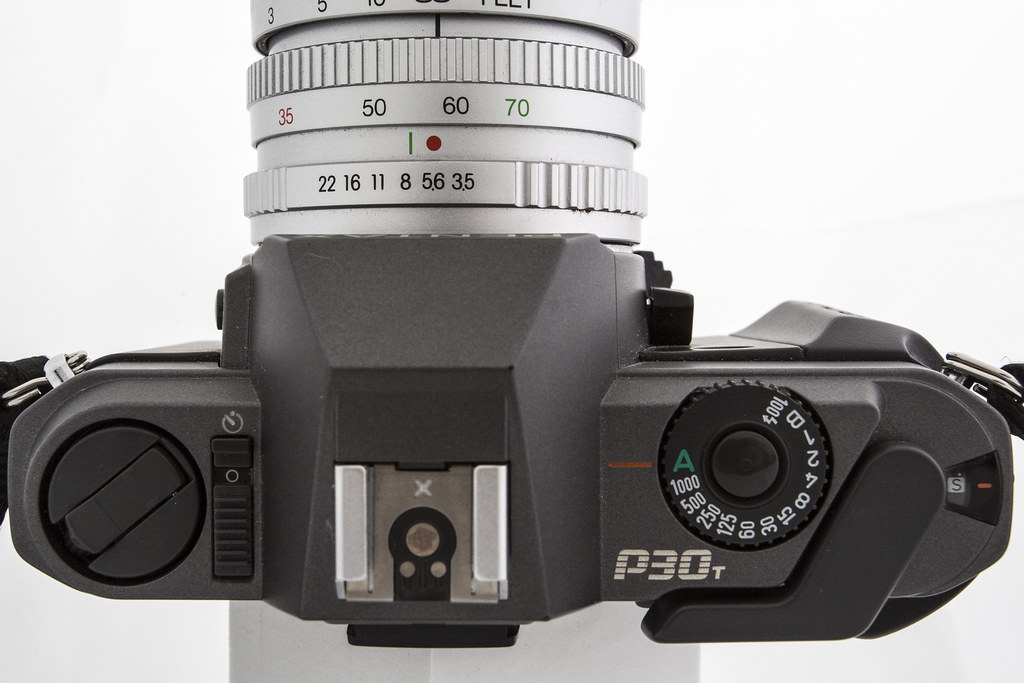
Camera Review: Pentax P30T

The Pentax P30T, attached to a lens from a
Vivitar v4000 that suffered a sad fate.
I didn't know much about the Pentax P30T when I saw it pop up on a Craigslist ad for $30. Of course, I looked it up before sending out the email, but there wasn't much to say, it seemed. It was the pictures that drew me in. It just felt so... 1980's. All of the controls flush against the top panel. The pewter colored body. The big "P30" etched vertically into the hand grip rubber in that TV interlaced style that was so common back then.

This camera looked like something from Blade Runner.

Friday, February 19, 2016

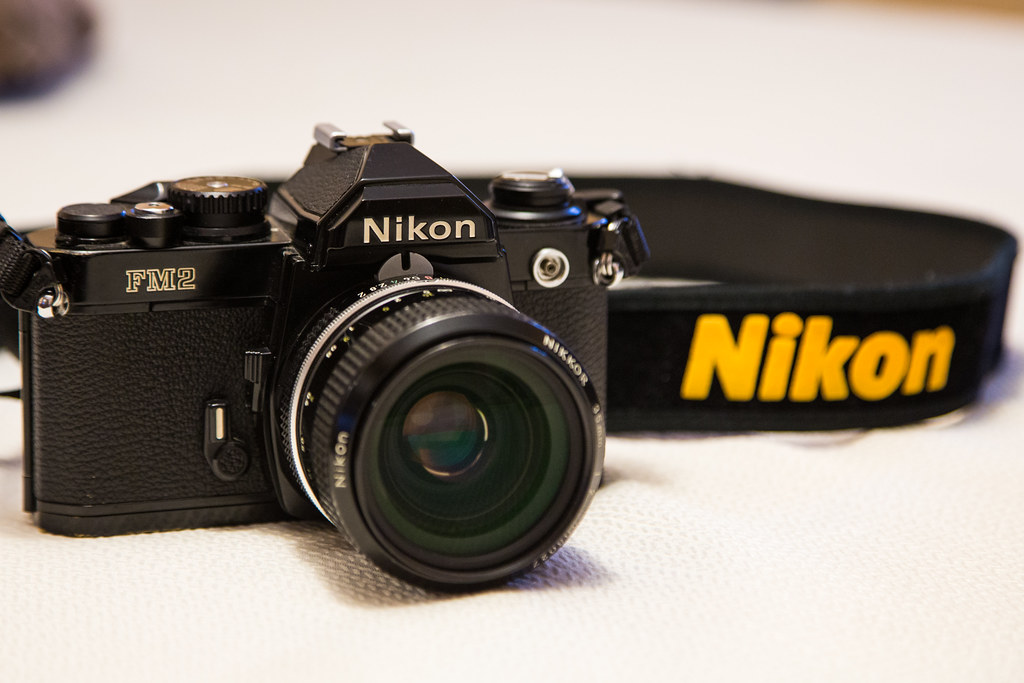
Camera Review: Nikon FM2n

The Nikon FM2n entered the world as a minor update to the groundbreaking FM2 in 1984. With an all-mechanical shutter reaching unheard-of speeds of 1/4000s, the FM2 is a camera that is already unique enough to be on my "want" list.

Early FM2n models saw only a couple of changes over the FM2, the most obvious being an update to the maximum flash sync speed from 1/200s to 1/250s.  A new mirror stop was also added to the FM2n, as well as an extra light trap in the mirror box. Later FM2n's (from 1989 onward) also saw the titanium honeycomb-patterned shutter replaced with a smooth aluminum one.

Monday, February 8, 2016

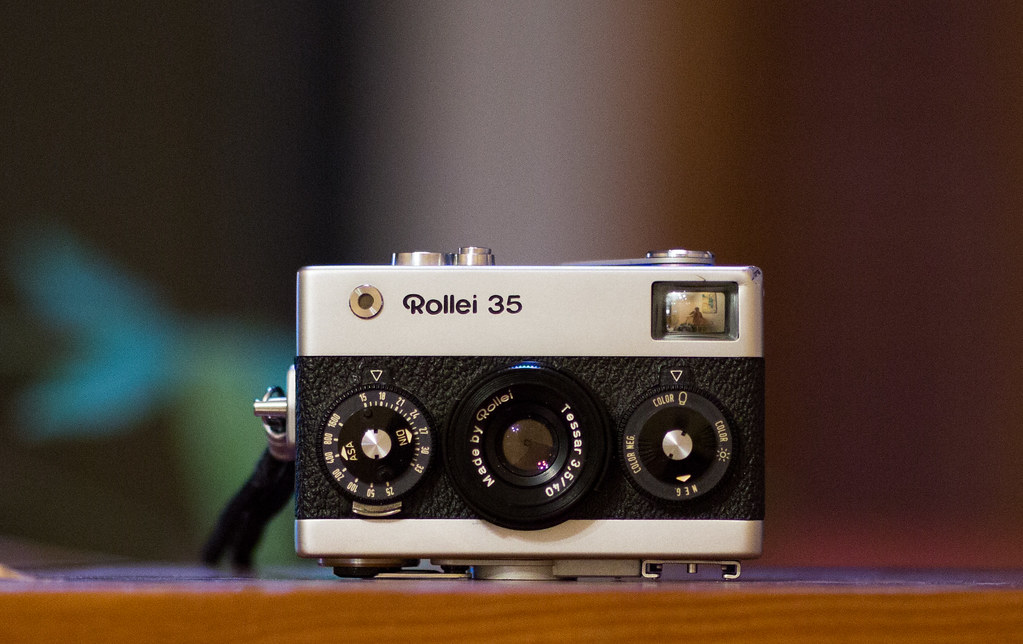
Camera Review: Rollei 35

Ah, the Rollei 35. People love it! They're going for about $150 on eBay right now, more than the price of many great SLR's. As for me, I'd have a hard time paying that much for one. Sure it has some great talking points, but never before has a camera made me feel so inadequate.


Wednesday, January 27, 2016

Camera Review: Pentax K1000 (and Asahi SMC Pentax-M 50mm f/2)


The Pentax K1000 has a reputation for being a solid, no-frills SLR that will probably outlast your children. It's a pretty accurate reputation. I bought mine off of an ex-student that had taken a college photography class and (of course) moved right on to a digital camera. I paid $25 dollars for it and an Asahi SMC 50mm f/2.0 lens. I'm going to include the lens in this review because otherwise it would be quite short. Of course, if you're not interested in that lens you can ignore the appropriate parts.

Monday, January 25, 2016

Camera Review: Nikkormat FT2


Nikon FT2 with Nikkor 35mm f/2.0
Now that I've finally gotten some good use out of this camera, it's time for a review. The Nikkormat name was given to the consumer-level line of cameras manufactured by Nikon through much of the 1960's and 1970's. This particular model, the Nikkormat FT2, was manufactured from 1975 to 1977 as the successor to the FTn. So this camera is just about as old as I am. It's a metered manual camera, meaning you set the aperture and shutter speed yourself, and there are no automated modes available.

Thursday, July 23, 2015

Camera Review: Olympus OM-10 (With Manual Adapter)

The Olympus OM-10 was the first consumer-grade OM system 35mm SLR on the market, introduced in 1979. This particular camera was given to me by my stepdad in what can only be considered a film photographer's dream scenario, namely: "Here's a big box with several cameras, lenses, and other assorted gear. Take whatever you want, I don't want it in the house anymore."

Of course, after a couple of decades none of these cameras were at 100%, though they generally only require a CLA or minor adjustment to get them back to their former glory.  The OM-10's only imperfection is a bit of an odd one.  When the ISO setting is at the highest value of 1600 and the shutter is released, the mirror flips up only half way and the camera emits a random series of chattery beeps, like an 8-bit squirrel on methamphetamine.  It won't stop until I move the ISO to a lower value, at which point the chattering stops and the mirror resets to its resting position.

Monday, July 13, 2015

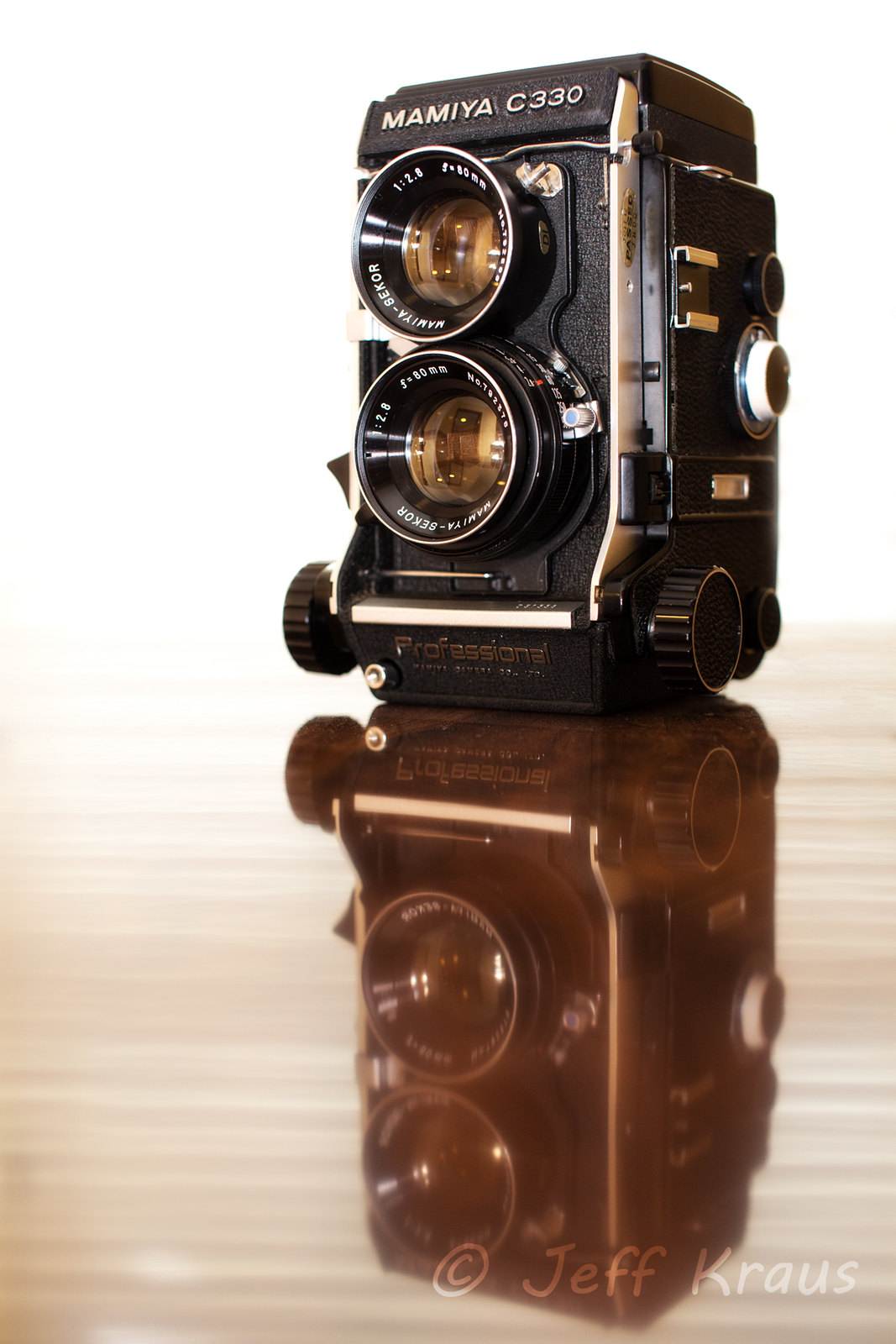
Camera Review: Mamiya C330 Professional


Mamiya C-Series Cameras


The Mamiya C-series TLRs have been around for quite some time, with the original Mamiyaflex C being released in 1956 or 1957. Shortly after that, the line split into two with the C2 and the C3 (the latter being the slightly more advanced model). Subsequent generations continued in this fashion with the C22/C33, and finally C220/C330 and variants (C220f, C330f, C330s).

After the Rolleicord III stole my heart, there was very little chance that it would be my last TLR.  The
next focal point for my obsession was the Mamiya C330. After much searching on eBay and Craigslist, I found a near-perfect specimen sporting a Mamiya-Sekor 80mm f/2.8 "Blue Dot" lens pair.

This particular model (with no suffix) was in production from 1969 to 1974. It had several improvements over its predecessor the C33, including support for both 120 and 220 film (by rotating a plate on the film door), and interchangeable focus screens.