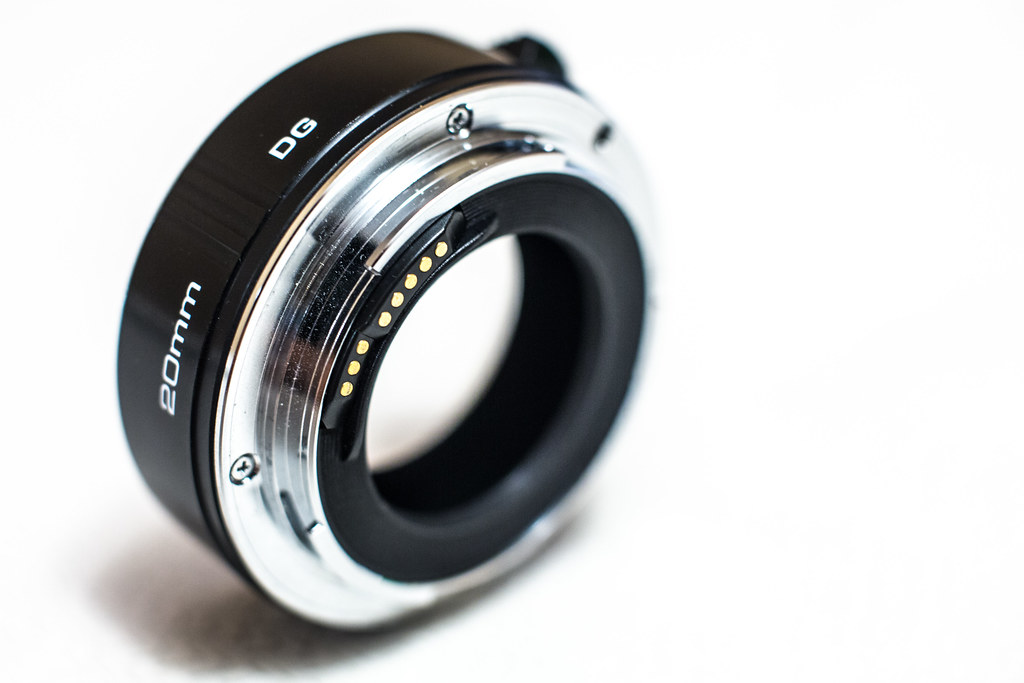
There seems to be a lot of misconceptions out there regarding extension tubes and how they work, and if you're just getting started with them, it can be a little frustrating when you're not getting them to behave how you might expect. I've talked a few people through it to clear up questions they had, so hopefully by writing up a post about it, it will help someone else one day.
Extension Tubes Are Just Spacers
 |
| An extension tube |
Some years back, I ran across several product reviews for a set of extension tubes that were unnecessarily negative. The main reason was because the users expected to be able to "zoom in" farther with these tubes to allow the subject to better fill the frame. What they were probably thinking of was a
teleconverter, which introduces additional lens elements to effectively increase the focal length of the lens it's attached to. Extension tubes are different. They have no optical elements at all; their only purpose is to add additional distance between the lens and the film plane. If you really wanted to, you could actually make your own extension tube with a cardboard toilet paper tube! That's how simple they are.